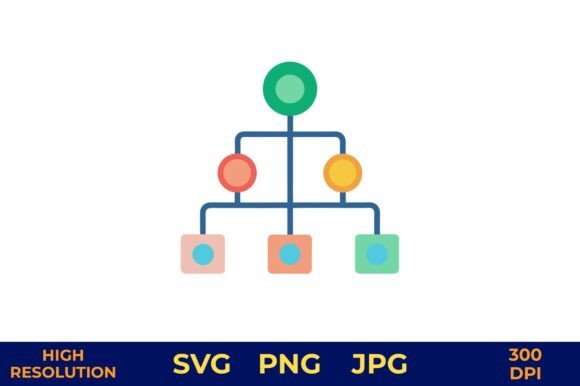
Decision Tree Flowchart Icon
A Practical Eye for Embroidery Design
As a designer who’s stitched countless projects from custom apparel to handmade gifts, I approach each embroidery design with the same level of scrutiny I’d apply to a client’s brief. When evaluating the Decision Tree Flowchart Icon, I’m not just looking at a graphic—I’m imagining it on fabric, in motion, and in the hands of real customers. This design isn’t just about aesthetics; it’s about function, usability, and how well it translates into a finished product.
The First Impression
The Decision Tree Flowchart Icon immediately strikes a balance between clarity and visual interest. Its clean lines and structured layout evoke a sense of logic and organization, which makes it feel purposeful. The icon’s theme is professional yet approachable, fitting for a wide range of applications—from business branding to personal gifts. The transparent backgrounds are a thoughtful touch, allowing for easy integration into various designs without overwhelming the surrounding elements.
Visually, the icon feels modern and minimalistic, making it versatile for both digital and physical use. The 420 size provides enough detail without being overly complex, which is a key factor when considering its performance in embroidery. However, I would recommend testing this design on different fabrics and hoop sizes before committing to a large-scale project.
Real-Life Use Case: Custom Tote Bag Design
Let’s imagine a scenario where the Decision Tree Flowchart Icon is used on a custom tote bag for a small business that offers organizational tools and productivity services. The icon could serve as a subtle yet meaningful logo or decorative element. On a light-colored fabric, the design stands out with its sharp lines and clear shapes, making it ideal for a brand that values clarity and structure.
However, when considering the stitch density and hoop size, it’s important to note that the complexity of the icon may require careful planning. While the icon itself is not overly detailed, the branching paths and flowchart elements can create dense stitch areas. For a tote bag, this might be acceptable, but for smaller items like caps or patches, the design could become cramped or lose its intended clarity.
Performance in Real Embroidery Situations
The Decision Tree Flowchart Icon performs well in most embroidery scenarios, especially those that prioritize simplicity and readability. It works particularly well on light-colored fabrics and with high-contrast thread colors, ensuring that the design remains visible even after multiple washes. That said, it may not be the best choice for dark fabrics or textured surfaces, where the details can easily blend into the background.
For custom apparel like sweatshirts or t-shirts, the design holds up well, especially when paired with a proper stabilizer and hoop size. It’s also suitable for holiday embroidery or personalized gifts, where a clear and recognizable icon adds value without being too busy.
That said, there are some situations where the Decision Tree Flowchart Icon should be used with caution. For example, on stretchy fabrics or curved surfaces like hats, the design may distort slightly due to the fabric’s movement. Similarly, on thin or delicate fabrics, the stitches might not hold as well, potentially leading to puckering or uneven results.
Design Impact and Branding Considerations
The Decision Tree Flowchart Icon has a strong visual appeal that can enhance the professionalism of a craft business or Etsy seller. Its clean and structured appearance aligns well with brands that emphasize organization, clarity, and efficiency. In terms of brand consistency, the design offers a solid foundation for creating a cohesive look across various products, from printable mockups to digital embroidery files.
From a customer perspective, the icon is instantly recognizable and easy to interpret, which is crucial for personalized gifts and handmade products. It also lends itself well to commercial embroidery, where clarity and recognition are key factors in building trust and repeat business.
Practical Designer Notes
Before using the Decision Tree Flowchart Icon in a final project, I always recommend a few practical steps:
- Test on scrap fabric first to ensure the design performs as expected on your specific material.
- Check thread color contrast to make sure the design remains visible under different lighting conditions.
- Review stitch density and adjust if necessary to prevent overcrowding or distortion.
- Confirm the hoop size and machine compatibility to avoid issues during stitching.
- Inspect small details like text and corners, which can sometimes be lost in translation.
- Use black and white mockups to test how the design will appear in different contexts.
- Compare the design on both light and dark fabric backgrounds to ensure versatility.
- Always use the correct stabilizer to support the fabric and maintain stitch quality.
- Ensure you have the proper license before selling finished products or digital assets.
- Consider whether the design works for both personal and commercial projects, depending on your goals.
Final Thoughts
The Decision Tree Flowchart Icon is a versatile and practical design that can elevate a wide range of embroidery projects. Whether you’re creating custom apparel, personalized gifts, or business branding, this icon offers a clear and professional aesthetic that resonates with both creators and consumers. With the right preparation and attention to detail, it can become a valuable asset in your design toolkit.